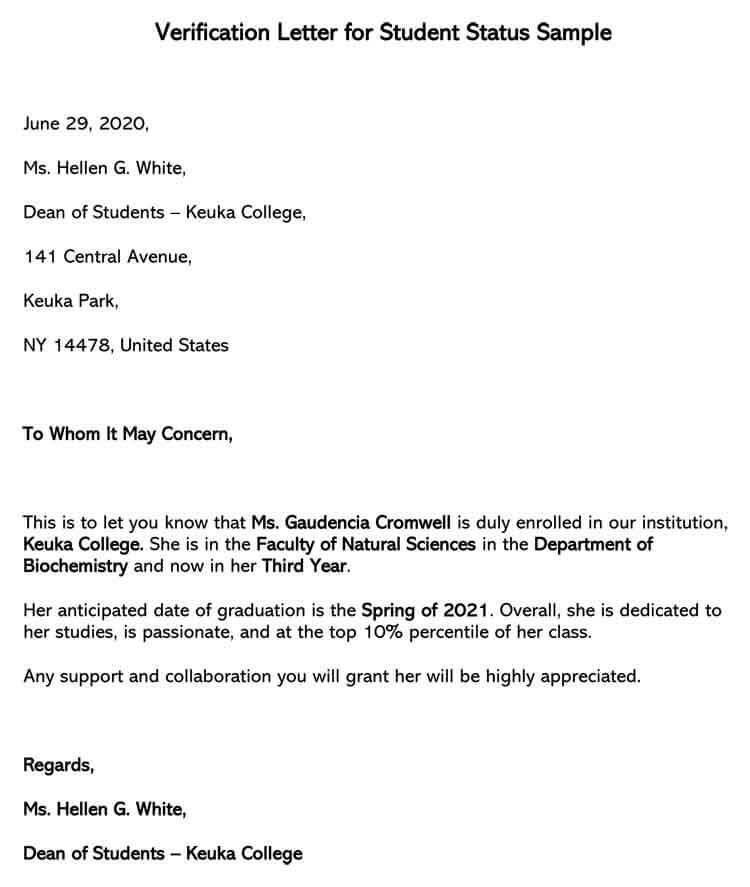
In today's dynamic educational landscape, accurately verifying student status isn't just a bureaucratic hurdle—it's the bedrock of trust, security, and efficiency. Whether you're a university administrator, a scholarship provider, or a potential employer, understanding the diverse Student Status Verification Methods & Alternatives is crucial for streamlining operations and combating an ever-evolving threat of fraud. The shift to online learning has amplified this need, transforming what was once a simple ID check into a complex digital challenge.
At a Glance: Key Takeaways
- Verification is Vital: Essential for fraud prevention, data security, and maintaining trust in education.
- National Student Clearinghouse (NSC) is Key: Provides comprehensive, free (to institutions) verification services for high school diplomas, enrollments, and degrees, covering most US students and degrees.
- Beyond NSC: Diverse Methods Exist: From traditional in-person ID checks to advanced online biometric and document verification.
- E-Learning Drives Innovation: The rise of remote education necessitates robust digital identity verification to combat new forms of fraud.
- Choose Wisely: Institutions should select verification partners based on reliability, integration options, and robust anti-fraud features.
- Benefits Abound: Faster processing, reduced costs, freed-up staff, and quicker opportunities for learners.
The Unseen Challenge: Why Verifying Student Status Matters More Than Ever
Imagine a world where anyone could claim a degree they didn't earn, access financial aid they weren't eligible for, or cheat on an exam without consequence. This isn't hyperbole; it's a very real threat in an increasingly digital world. The shift to e-learning and remote education, while offering unprecedented accessibility, has unfortunately created new avenues for security risks like fraud, identity theft, and cheating.
This is where robust student identity verification steps in. It's about more than just confirming a name; it’s about assessing a learner’s genuine identity, ensuring that the person who registers, attends, or completes studies is legitimate. This isn't a one-time check; it can be a continuous process, crucial before exams, upon enrollment, for remote class attendance monitoring, when issuing diplomas, or when applying for financial aid. Without it, the integrity of educational institutions and the value of legitimate qualifications are severely undermined.
The Gold Standard: National Student Clearinghouse and Its Offerings
When it comes to comprehensive, widespread student status verification in the U.S., the National Student Clearinghouse (NSC) stands as the undisputed leader. Operating 24/7, their online services are designed to be a lifeline for schools, districts, and institutions—and they come at no direct cost to these educational bodies. How? They're financed by the very entities that benefit from accurate verification: employers and background screening firms.
Think of it as a central hub that powers accuracy and efficiency across the educational ecosystem:
- DiplomaVerify: Outsources high school diploma verifications for participating schools and districts. This means less manual work for busy high school offices and quicker results for those needing verification.
- EnrollmentVerify: Allows colleges and universities to seamlessly refer commercial enrollment verification requests. No more sifting through individual emails or phone calls from third parties.
- DegreeVerify: The powerhouse for outsourcing degree verifications. Again, no cost to the institution, with an intriguing option: colleges can add a surcharge to verifications, potentially generating a new revenue stream while shedding administrative burden.
The benefits are clear: institutions save time and money, office productivity improves, verification costs plummet, staff are freed from tedious tasks, and credentials fraud is significantly reduced. And for learners? They benefit from faster qualification for opportunities, be it a job, a scholarship, or further education.
The NSC's reach is impressive, covering an astounding 97% of currently enrolled U.S. postsecondary students and 96% of all U.S. four-year postsecondary degrees. This broad coverage makes it an indispensable tool for anyone needing to confirm educational credentials in the United States.
Beyond the Clearinghouse: A Spectrum of Verification Methods
While the National Student Clearinghouse handles a massive volume of enrollment and degree verifications, it's just one piece of the puzzle. Institutions often require more immediate, direct, or continuous verification methods, especially for tasks like exam proctoring or access to sensitive student accounts.
Traditional Methods: The Pros and Cons of In-Person Checks
For decades, the standard for student verification was a simple, yet often cumbersome, process: manual, in-person assessment of government-issued IDs. Think of showing your passport, driver’s license, or Social Security Number to gain campus access, take an exam, or register for a course.
Pros:
- Direct Interaction: A human can physically check the ID and compare it to the person.
- High Trust (Historically): When done meticulously, it was considered very secure for its time.
Cons: - Inefficient: Long waiting lines, especially during peak registration or exam periods.
- Resource-Intensive: Requires significant staff time and dedicated physical spaces.
- Human Error: Verifiers can be rushed, fatigued, or simply make mistakes.
- Scalability Issues: Impractical for large student bodies or remote learning environments.
The Digital Revolution: Modern Online Verification Techniques
The rise of online learning demanded a shift, paving the way for automated online student identity verification. This revolution offers improved accuracy, efficiency, and security, moving verification from a bottleneck to a seamless part of the student journey.
Here’s a breakdown of common online verification measures:
- Selfie Verification: This method leverages biometric technology. A student takes a real-time photo of themselves, which often incorporates liveness detection (to confirm they're a living person, not just a photo or video). This selfie is then compared against a photo on a submitted ID document, ensuring the person matches the credentials.
- Government-Issued ID Verification: Students submit a photo or scan of a government-issued ID document, such as a passport or driver’s license. Advanced systems use Optical Character Recognition (OCR) to extract data and often pair this with database checks to confirm the document's validity. This is frequently combined with selfie verification for an extra layer of assurance.
- Student Email Verification: A simple yet effective first line of defense. This involves sending a one-time activation link to an institution-specific email address (e.g., student@university.edu). Only the legitimate owner of that email, presumably the enrolled student, can click the link and complete the verification.
- Account Verification: This method relies on existing secure logins. Students are prompted to log into their official university learning space (LMS, portal, etc.) to confirm their ownership. Since access to these platforms is typically secured by strong authentication, this serves as a reliable indirect verification.
- Reverification: Identity isn't a static concept. Reverification involves subsequent identity checks after initial verification to prevent account takeovers or ensure continued legitimacy. These checks can be triggered by various events, such as an ID expiry, a period of account inactivity, suspicion of unusual activity, or before a high-stakes event like a final exam.
Battling the Bad Actors: How Verification Fights Education Fraud
Fraud in education is a hydra-headed beast, constantly evolving to exploit vulnerabilities. It's not just about one student cheating on a test; it encompasses a wide range of illicit activities that erode trust and devalue genuine accomplishments.
Common forms of education fraud include:
- Illegitimate Learning Sites: Scammers setting up fake universities or online courses offering fraudulent certificates or diplomas.
- Falsified Documents: Students submitting altered transcripts, forged recommendation letters, or fake IDs for admission or financial aid.
- Student Visa Fraud: Individuals misrepresenting their student status to obtain visas, often without any intent to study.
- Data Breaches & Phishing Attacks: Cybercriminals stealing sensitive student and staff data, or tricking individuals into giving up login credentials, leading to account takeovers.
This is where robust student identity verification becomes a critical bulwark. It's not just a nice-to-have; it's vital for: - Fraud Prevention: Automated systems are designed to detect discrepancies and red flags far more accurately and quickly than manual processes.
- Building Trust: When an institution can confidently verify its students, it fosters trust among learners, faculty, employers, and the wider community.
- Protecting Sensitive Data: By ensuring only legitimate students access their accounts, verification adds a crucial security layer against data breaches and phishing-induced account takeovers.
- Reducing Manual Labor & Onboarding Costs: Automated systems free up valuable staff time, allowing them to focus on more impactful educational tasks rather than administrative gatekeeping.
- Improving the Student Experience: Faster, smoother verification processes mean students can access resources and opportunities more quickly, enhancing their overall educational journey. For instance, imagine a student needing to create your student ID online and having it verified quickly and efficiently – that’s a positive experience.
Choosing Your Verification Partner: Key Considerations for Institutions
For institutions looking to bolster their identity verification capabilities, selecting the right technology partner is paramount. This isn't a decision to take lightly, as the chosen solution will impact security, efficiency, and the student experience.
Here are key questions to ask and features to look for:
- Reliability of Document Databases: Does the solution tap into comprehensive, up-to-date databases for government-issued IDs? This is crucial for cross-referencing and detecting fraudulent documents. A robust system should be able to verify IDs from various countries if you have an international student body.
- Integration Options & Flexibility: How easily can the solution integrate with your existing systems (LMS, student information system, admissions portal)? Look for partners offering various integration options, such as:
- KYC (Know Your Customer) Flow via Link: A simple web link that directs students to a secure verification portal.
- Web SDK Embed: Allows you to embed the verification process directly into your website or application, providing a seamless, branded experience.
- API Integrations: For deeper, customized integrations with your backend systems.
- Biometric and Document Verification Capabilities: A holistic solution should offer both:
- Biometric Verification (e.g., Selfie Liveness Detection): Essential for confirming the physical presence of the student and preventing imposters using static images.
- Document Verification (e.g., OCR from Government ID): For accurately extracting and verifying data from ID documents, checking for tampering, and comparing against databases.
- Continuous Verification & Reverification Features: Can the system support ongoing identity checks triggered by specific events (e.g., before high-stakes exams, after periods of inactivity, or when updating personal information)? This proactive approach significantly enhances security.
- User Experience: Is the verification process intuitive and user-friendly for students? A clunky process can lead to frustration and support requests.
- Compliance & Data Privacy: Does the partner adhere to relevant data protection regulations (e.g., FERPA, GDPR)? How do they handle and secure sensitive student data?
- Scalability & Performance: Can the solution handle peak loads during enrollment periods without delays?
Future-Proofing Education: Continuous Verification and Emerging Trends
The landscape of student status verification isn't static. As technology advances and fraud schemes grow more sophisticated, so too must our defenses. The trend is moving towards even more integrated and continuous verification models. Imagine AI-powered systems that learn student behavioral patterns, flagging anomalies that could indicate an account takeover, or blockchain technology offering an immutable record of academic achievements, making diploma fraud virtually impossible.
The goal isn't just to catch fraud but to create an environment where trust is inherent, and the value of education is universally protected.
Ready for What's Next: Empowering Your Educational Ecosystem
Navigating the complexities of student status verification can seem daunting, but it’s an investment that pays dividends in security, efficiency, and reputation. By understanding the robust offerings of the National Student Clearinghouse, embracing modern digital verification techniques, and strategically partnering with reliable technology providers, educational institutions can fortify their defenses against fraud and pave the way for a more secure and streamlined future.
This isn't just about compliance; it's about safeguarding the integrity of learning and ensuring that every student's hard-earned achievements are recognized and respected. Embrace these methods, and you’re not just verifying status—you’re building a foundation of trust that benefits everyone in the educational journey.